Is Your Grocery Store Ready for Fall?
A seasonal grocery store cleaning checklist for safer entrances, cleaner departments, better-looking floors and stronger preparation for rain, mud and increased indoor traffic.
Request a Grocery Store Cleaning Quote View the ChecklistAs summer reaches its peak, grocery store managers should begin preparing for the operational challenges of fall. Dry dust and outdoor debris soon give way to rain, wet footwear, fallen leaves, muddy entrances and longer periods of indoor customer traffic.
Grocery stores face cleaning demands that are different from most commercial properties. Customers move continuously between entrances, produce departments, bakery areas, checkout lanes, washrooms and exterior cart areas. A small amount of moisture or food debris can quickly spread across a much larger section of the store.
A planned grocery store fall cleaning program can help protect flooring, improve customer presentation, support safer walking surfaces and prepare employees for the busier wet-weather season.
Why Fall Creates New Cleaning Challenges for Grocery Stores
Rain and Wet Entrances
Water can move quickly from entrance doors and shopping-cart areas into checkout lanes, front aisles and customer-service zones.
Mud, Leaves and Abrasive Grit
Outdoor debris can scratch floor finish, dull polished surfaces and create visible traffic lanes throughout the store.
Produce and Food Debris
Moisture from produce displays can combine with leaves, packaging, dropped food and customer traffic to create difficult floor conditions.
Increased Indoor Traffic
Cooler temperatures can lead to more time spent indoors and greater pressure on washrooms, checkout areas and shared touchpoints.
Receiving-Area Contamination
Rainwater and outdoor soil may enter through loading docks, delivery doors, pallets and warehouse traffic.
Floor-Finish Wear
Repeated exposure to grit and moisture can reduce floor shine and shorten the life of protective floor coatings.
Grocery Store Fall Cleaning Checklist
- Inspect exterior walkways and remove leaves, litter and loose debris.
- Clean shopping-cart collection areas and entrance approaches.
- Inspect entrance mats for saturation, movement, curling and wear.
- Vacuum or extract recessed entrance matting.
- Clean the floor beneath all movable mats.
- Remove summer dust from ledges, vents, signage and display fixtures.
- Deep-clean front entrances, checkout lanes and customer-service areas.
- Inspect floor finish for dull traffic lanes and scratches.
- Schedule floor scrubbing, polishing or burnishing where required.
- Clean produce floors, display edges and surrounding fixtures.
- Inspect bakery floors for flour, grease and food residue.
- Degrease meat, deli and prepared-food floor areas appropriately.
- Clean refrigerator and freezer floor perimeters.
- Clean receiving areas, loading docks and delivery entrances.
- Remove cardboard fibres, pallet debris and packaging residue.
- Deep-clean public and employee washrooms.
- Disinfect frequently touched surfaces and shared equipment.
- Clean staff lunchrooms, lockers and shared appliances.
- Review spill-response supplies and wet-floor signage.
- Increase inspection frequency during rainy weather.
1. Prepare Grocery Store Entrances for Rain
The front entrance is where fall cleaning problems often begin. Customers, employees, shopping carts and delivery activity can carry water and grit into the store before staff notice the changing conditions.
Grocery stores should use sufficient entrance matting to scrape debris from footwear and absorb moisture before customers reach the main sales floor. A small mat placed directly inside the door may not be adequate during sustained rainfall.
- Use scraper-style matting at the first entrance zone.
- Use absorbent matting immediately inside the store.
- Keep mats flat and secured against movement.
- Vacuum mats before soil becomes deeply embedded.
- Rotate or replace saturated mats promptly.
- Inspect the surrounding flooring repeatedly during rain.
2. Protect High-Traffic Grocery Store Floors
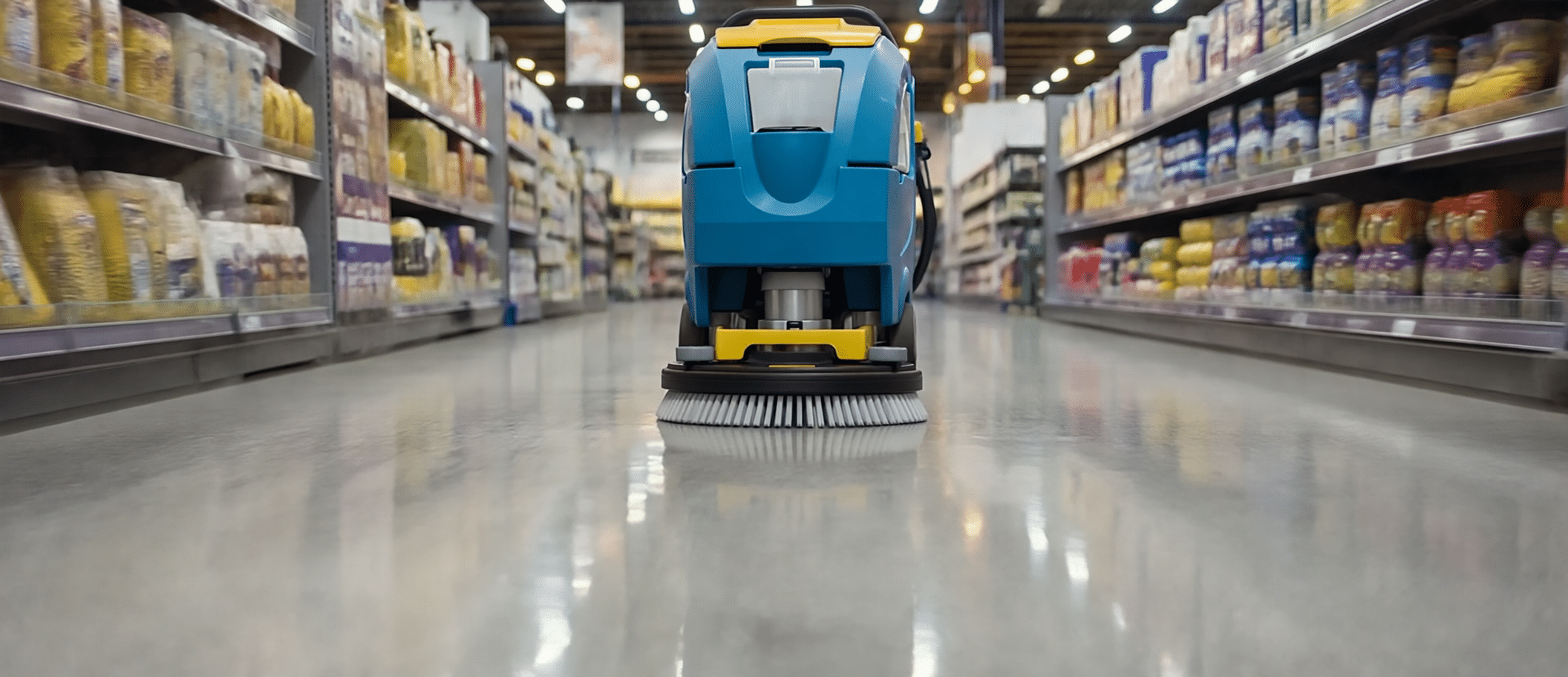
Grocery store floors are exposed to carts, pallets, shoes, food residue, liquids and constant customer movement. When abrasive grit becomes trapped beneath shoes and cart wheels, it can scratch floor finish and gradually reduce shine.
Routine mopping may remove loose surface soil but may not correct embedded contamination, damaged finish or worn traffic lanes. Depending on the floor system, the store may require machine scrubbing, polishing, burnishing or a more complete floor-finish restoration.
Learn more in our guide explaining why commercial floors lose their shine and how often commercial floors should be professionally polished .
3. Inspect Produce, Bakery and Prepared-Food Areas
Grocery store departments require different cleaning methods because the type of soil changes throughout the building.
Produce Department
Remove leaves, moisture, packaging, soil and dropped produce promptly. Clean under movable displays and inspect floor edges where debris collects.
Bakery Department
Address flour dust, crumbs, icing, oil and food residue before they spread into nearby customer areas or become embedded in textured flooring.
Meat and Deli Areas
Follow site-specific sanitation procedures and use products appropriate for food-service environments, grease, protein residue and the floor material.
Prepared-Food Areas
Degrease floors, clean floor edges and address food residue without leaving slippery chemical film or excessive moisture behind.
For additional guidance, see our article on removing grease from commercial kitchen floors .
4. Clean Checkout Lanes and Customer Touchpoints
Checkout lanes combine continuous customer traffic with carts, baskets, dropped products, receipts, packaging and frequent hand contact.
- Clean conveyor belts according to manufacturer and store procedures.
- Clean checkout counters and bagging areas.
- Remove debris beneath lane fixtures where accessible.
- Clean payment terminals and touchscreens with compatible products.
- Inspect floor edges around checkouts and customer-service counters.
- Clean cart and basket handles according to the store’s sanitation plan.
High-touch cleaning should focus on removing visible soil first. Where disinfection is required, staff should use an appropriate product and follow its labelled contact time.
5. Do Not Overlook Receiving and Loading Areas
Receiving areas can bring outdoor contamination into the back of the store. Wet pallets, delivery footwear, pallet-jack wheels and loading-dock traffic can introduce water, dirt, cardboard fragments and packaging debris.
- Sweep or vacuum loose debris before wet cleaning.
- Clean pedestrian routes and emergency-access areas.
- Remove broken pallet wood, shrink wrap and cardboard fibres.
- Address grease or equipment residue using suitable methods.
- Inspect delivery-door mats and transition areas.
- Prevent receiving-area soil from spreading onto the sales floor.
6. Prepare Washrooms for Increased Indoor Traffic
Fall brings greater washroom use and increased expectations for visible cleanliness. Grocery store washrooms should be inspected according to customer traffic, not only at fixed times.
- Clean and disinfect toilets, urinals, sinks and touchpoints.
- Remove mineral deposits using fixture-compatible products.
- Clean partitions, doors, walls and dispensers.
- Inspect floor edges and areas around fixtures.
- Empty and disinfect waste receptacles.
- Restock soap, toilet paper and hand-drying supplies.
- Record inspections when required by store policy.
Persistent odours and dark mineral lines require source-based cleaning rather than fragrance alone. Read our guide on commercial washroom odours and dark fixture lines .
Suggested Fall Cleaning Frequency for Grocery Stores
| Grocery Store Area | Suggested Frequency | Fall Priority |
|---|---|---|
| Entrances and mats | Multiple inspections daily | Increase during rain and peak shopping periods. |
| Checkout lanes | Daily and as needed | Monitor spills, debris and wet cart traffic. |
| Produce floors | Continuous inspection | Remove moisture and organic debris promptly. |
| Bakery and prepared-food floors | Daily and as required | Control grease, flour and food residue. |
| Public washrooms | Multiple times daily | Adjust frequency based on actual traffic. |
| Receiving areas | Daily to several times weekly | Prevent outdoor debris from spreading indoors. |
| Machine floor scrubbing | Condition-dependent | Prioritize entrances and visible traffic lanes. |
| Floor polishing or burnishing | Condition-dependent | Base service on coating wear and desired appearance. |
When Should a Grocery Store Hire Professional Cleaners?
Professional grocery store cleaning may be appropriate when managers need reliable recurring service, specialized floor equipment, overnight cleaning, department-specific schedules or detailed inspection routines.
Consider professional service when:
- Store floors remain dull or visibly soiled after routine cleaning.
- Wet entrance conditions are difficult to control.
- In-house employees are being diverted from customer service.
- Receiving and food-department floors require deeper cleaning.
- Washroom conditions are inconsistent throughout the day.
- The store requires documented nightly or weekly service.
- Management needs a customized scope for several departments.
Explore professional grocery store cleaning in Chilliwack and our broader Chilliwack commercial cleaning services .
Request a Grocery Store Cleaning Quote
Tell CBF Canada about your grocery store, market, food-retail property or supermarket cleaning requirements. We can assess entrances, sales floors, department areas, washrooms, receiving spaces and recurring janitorial needs.
Frequently Asked Questions
When should grocery stores begin fall cleaning?
Grocery stores should begin seasonal preparation before prolonged rainy weather. Entrance mats, floors, washrooms, receiving areas and department cleaning schedules should be reviewed before wet-weather traffic increases.
How often should grocery store entrances be inspected during rain?
Busy entrances may need multiple inspections throughout the day. Frequency should increase during heavy rain, deliveries, peak shopping periods and whenever mats become saturated.
Why do grocery store floors lose their shine?
Abrasive grit, cart traffic, food residue, moisture, incorrect cleaning chemicals and worn protective finish can all contribute to dull commercial flooring.
Does CBF Canada provide recurring grocery store cleaning?
CBF Canada can create recurring commercial cleaning schedules based on store size, operating hours, traffic, departments, floor materials and management requirements.